How Much Heat Can Window Tint Block in a Georgia Summer?
Georgia summers are hard on both drivers and vehicles. In Rome and across Floyd County, long sunny days, high humidity, and intense pavement heat can turn a parked car into an uncomfortable space within minutes. That is why so many vehicle owners ask the same question: how much heat does window tint actually block in a Georgia summer? The answer is meaningful, but it is not as simple as one percentage number on a spec sheet. Heat rejection claims can sound impressive, yet they only make sense when you understand what part of solar energy is being measured and how that film performs on real glass in real driving conditions. For many Georgia drivers, quality ceramic window tint is a smart choice because it can noticeably reduce heat and improve comfort. Still, the real difference you feel depends on film type, tint percentage, glass type, and whether your vehicle sits in direct sun, partial shade, or frequent stop-and-go traffic.
Table of Contents
- How hot a Georgia summer actually makes a car's interior
- What heat rejection and TSER numbers actually mean
- How window tint physically blocks heat
- How much heat each film type blocks
- Real-world heat difference: tinted vs untinted
- Heat rejection comparison by film type
- Other factors that affect how much heat tint actually blocks
- FAQ
- Conclusion
How Hot a Georgia Summer Actually Makes a Car's Interior
A parked car heats up faster than most drivers expect
One of the clearest reasons drivers search for window tinting Rome GA is simple: summer heat is relentless. Even on a routine afternoon, a parked vehicle can build up heat quickly through the windshield, side glass, and rear glass. Sunlight enters the cabin, warms seats, dashboards, and trim, and those surfaces then radiate heat back into the air. The result is not just a warm car. It is a heat trap that can feel extreme by the time a driver gets back in.
In practical terms, this means drivers often notice three kinds of discomfort at once. The air feels hotter. Surfaces such as the steering wheel and seat belt buckle feel hotter. The air conditioner has to work harder to bring the cabin back down to a comfortable level. That is why the question is not only whether tint darkens windows. The real question is how much heat can window tint block before that heat builds up inside the vehicle.
Humidity makes hot cabins feel even worse
Georgia heat is not only about temperature. Humidity adds to the discomfort because it makes the cabin feel heavier and slower to cool. While tint does not remove humidity from the air, reducing solar heat gain can make the space feel more manageable when you first get in and while the AC begins working. For daily drivers in Rome, this matters during school pickup, errands, lunch breaks, and commutes where the car is repeatedly parked in open lots.
Daily driving creates repeated heat exposure
Vehicle owners researching best window tint for hot cars are often thinking about more than one summer weekend. They are thinking about years of daily use. A car that sits outside at work every weekday goes through repeated heating cycles all season long. That repeated stress can affect both comfort and interior wear. Quality film can help limit some of that load by reducing how much solar energy enters through the glass in the first place.
The key takeaway is straightforward: Georgia summer heat is strong enough that even modest improvements in solar control can feel noticeable, especially for drivers who spend a lot of time on the road or park outdoors regularly.
What Heat Rejection and TSER Numbers Actually Mean
Heat rejection is a broad term, not one single measurement
When people look up how much heat does window tint block, they often see percentages that sound easy to compare. In reality, heat rejection can refer to more than one test category. Some films highlight infrared rejection. Others emphasize UV rejection. Others point to total solar energy rejected, often called TSER. Those numbers are related, but they are not interchangeable.
This is where confusion begins for many shoppers. A film with a high infrared number may still need to be evaluated in the broader context of total solar performance. Likewise, a dark-looking film is not automatically the best heat-blocking film. The right way to compare products is to understand what each number actually represents.
TSER is one of the most useful comparison points
TSER stands for total solar energy rejected. In plain language, it describes how much of the sun's total energy is reflected or absorbed and re-radiated away instead of being allowed to pass into the vehicle. This is why ceramic tint TSER percentage is such an important search term for informed buyers. It gives a more complete picture than any single heat-related claim on its own.
TSER matters because the sun does not heat your car through only one type of energy. Solar load includes visible light, infrared energy, and ultraviolet radiation. A film that performs well across the full solar spectrum can often feel more effective in daily use than a film that looks impressive in only one narrow category.
Infrared rejection is important, but it is not the whole story
Infrared heat rejection is important because infrared energy is a major part of the heat you feel coming through the glass. Premium ceramic films are often chosen for strong infrared control. That said, a driver should avoid comparing films based on infrared numbers alone. Two films may advertise different IR figures yet feel closer or farther apart in real-world use depending on overall construction, glass type, and the amount of total solar energy rejected.
UV rejection protects more than comfort
UV rejection does not usually drive the instant heat sensation the way infrared control does, but it still matters. It helps protect interior materials and supports a better long-term ownership experience. A quality film can provide meaningful UV protection while also reducing glare and improving comfort. For many drivers, the most useful heat-control film is the one that balances all of these benefits well.
How Window Tint Physically Blocks Heat
Window tint manages solar energy in multiple ways
Window tint does not cool a car like an air conditioner. Instead, it works by reducing how much solar energy enters through the glass. Some energy is reflected away, some is absorbed by the film itself, and some is blocked before it reaches interior surfaces. The exact balance depends on the film type and construction.
This is why high-quality films can make such a difference. They are not simply dark sheets placed on glass. Better films are engineered to manage solar energy more effectively, which is why premium options can feel more comfortable even at similar visible darkness levels.
Infrared heat is a major source of the heat you feel
One reason ceramic tint gets so much attention is its ability to help manage infrared energy. Infrared is strongly connected to the sensation of heat building in the cabin and on interior surfaces. If less infrared energy enters the vehicle, the dashboard, wheel, seats, and cabin air often feel less punishing after sun exposure.
For a driver comparing carbon and ceramic, this is where ceramic usually stands out. It is often selected by drivers who care less about appearance alone and more about measurable comfort during Georgia's hottest months.
Visible light and glare also shape comfort
Visible light transmission, or VLT, refers to how much visible light passes through the film and glass. Lower VLT usually means a darker appearance. Darker glass can help with glare reduction, but darkness alone does not equal maximum heat rejection. That is why lighter premium ceramic films can sometimes outperform darker lower-grade films when the goal is heat control rather than just privacy or appearance.
UV control helps protect surfaces over time
Ultraviolet radiation contributes more to fading and material wear than to the immediate blast of heat a driver feels, but it remains an important part of the equation. Reducing UV exposure can help support longer-lasting interior materials and more comfortable daily driving over time. For many vehicle owners, this adds to the overall value of a premium film package.
How Much Heat Each Film Type Blocks
Dyed tint is usually the entry-level option
Dyed film is often chosen for appearance and basic glare control. It can offer some heat reduction, but it is generally the least effective of the main film categories when drivers are focused on strong summer heat performance. For someone asking about window tint heat rejection Georgia, dyed film is best viewed as the budget baseline rather than the high-performance answer.
This does not mean dyed film has no value. It can improve comfort compared with bare glass and may work for drivers with modest expectations. But in hot Georgia conditions, it typically does not deliver the same level of measurable heat control as better-performing films.
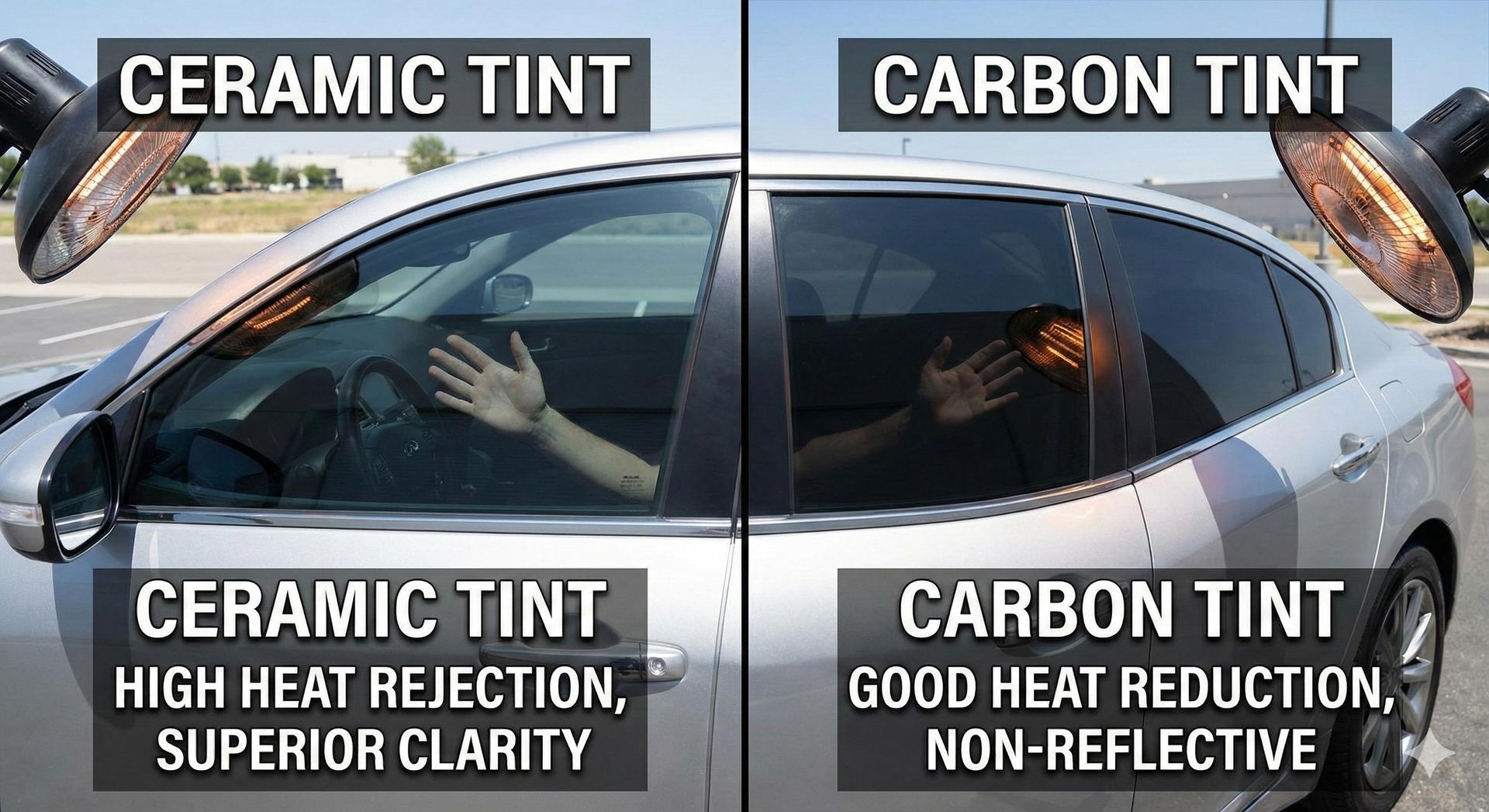
Carbon tint is a stronger middle-ground option
Carbon tint generally improves on dyed film by offering better heat management, good glare reduction, and more refined long-term performance. It is often selected by drivers who want a noticeable upgrade without paying for the highest-performance category. For many vehicles, carbon can provide a respectable improvement in comfort, especially when compared with an untinted or lightly protected interior.
Still, when the question becomes which film type performs best for heat rejection, carbon usually sits behind ceramic. It is a balanced option, but not usually the top choice for maximum summer comfort.
Ceramic tint is usually the premium heat-control option
Ceramic tint is widely considered the premium choice for drivers who want the strongest overall heat rejection available in a non-metallic film. It is often preferred because it can combine high TSER, strong infrared control, solid UV protection, and excellent clarity. For drivers researching LLumar ceramic tint heat rejection, this is where premium products such as LLumar CTX and LLumar IRX fit into the conversation.
Trim Ideas offers LLumar auto window tint options for drivers who want measurable heat-control benefits without relying on exaggerated claims. For daily summer driving in Rome and Floyd County, quality ceramic film is often the most compelling option for people who want the coolest-feeling cabin possible from their tint investment.
The difference is often noticeable in daily driving
The biggest reason drivers choose ceramic is not because of marketing language. It is because the difference can be felt. A cooler steering wheel, less intense radiant heat on the arm, and a cabin that feels easier to bring down with AC are the kinds of changes that matter in actual summer use. Results always vary by vehicle and conditions, but for many drivers, ceramic produces the most noticeable upgrade.
Real-World Heat Difference: Tinted vs Untinted on a Georgia Summer Day
Untinted vehicles allow more solar load to build up
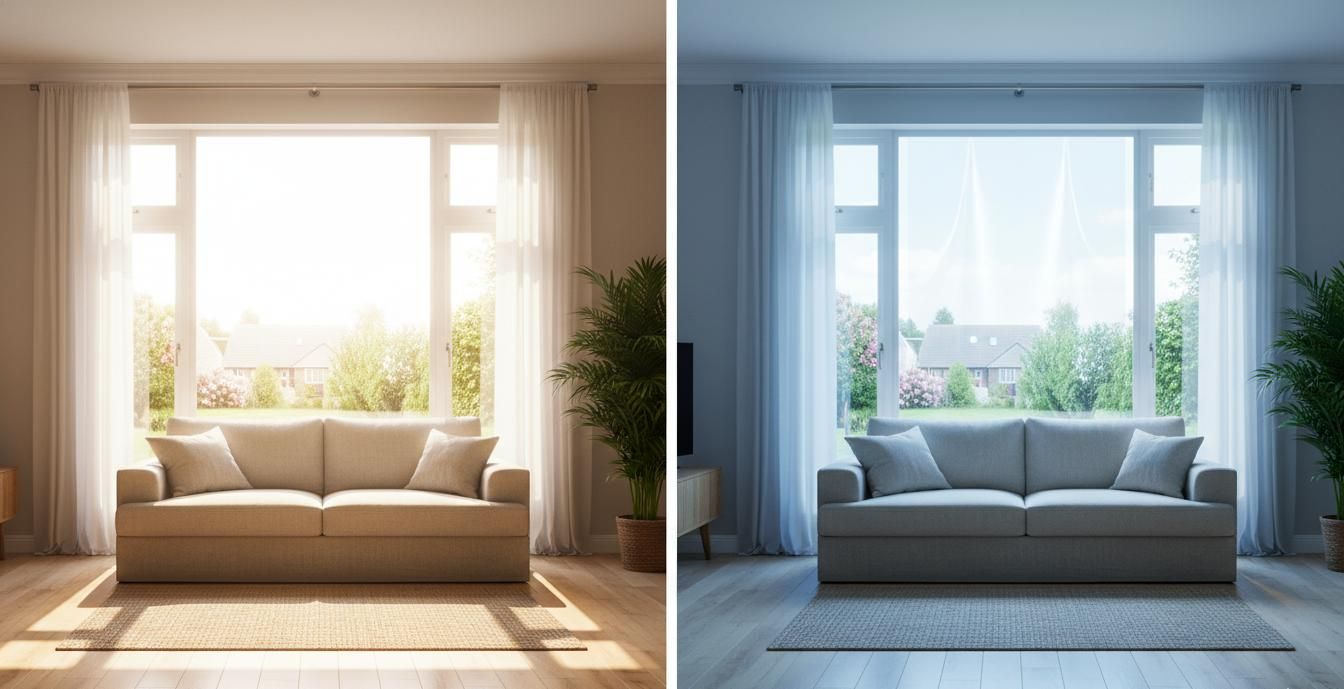
A vehicle with no aftermarket tint allows more sunlight and solar energy to pass through the glass. On a hot Georgia day, that means more heat soaking into the dashboard, seats, door panels, and steering wheel. Even if the cabin temperature eventually becomes bearable once the air conditioner is running, the first several minutes can feel significantly harsher.
This is why drivers asking how much cooler does a car feel with ceramic tint are usually focused on everyday experience, not just lab data. They want to know whether the film changes the feel of the cabin in a meaningful way. In many cases, it does.
Ceramic tint can reduce surface heat and perceived intensity
One of the most practical benefits of high-quality tint is that it can help reduce interior surface temperature buildup and cut down the intensity of direct sun exposure on the body. That means the dashboard may not feel as punishing, the steering wheel may be more manageable, and the side of the cabin facing the sun may feel less aggressive during the drive.
No tint can prevent a parked car from heating up completely in full Georgia sun. That expectation is unrealistic. The more accurate expectation is that premium tint can help reduce heat gain enough to improve comfort, protect interior materials, and make the cool-down period less severe.
Noticeable difference depends on vehicle use
The difference tends to be most obvious for drivers who park outdoors, commute during afternoon sun, or drive vehicles with large glass areas. SUVs, trucks, and cars with broad windshields often reveal tint performance clearly because there is simply more glass for solar energy to move through. Drivers who mainly park in garages may still appreciate tint, but the day-to-day heat difference is usually most dramatic for vehicles left in open lots.
Temperature reduction is real, but should not be promised as identical for every vehicle
Some drivers want one guaranteed temperature figure. That is not the best way to think about tint. Real-world results vary based on vehicle color, interior material, sun angle, parking duration, windshield coverage, and outside conditions. A more honest and useful answer is that quality ceramic tint can create a meaningful and noticeable improvement, especially in reducing heat intensity and interior surface buildup, without promising the same exact result for every car.
Heat Rejection Comparison by Film Type
Main film comparison table
| Film Type | Total Solar Energy Rejected (TSER) | Infrared (IR) Heat Rejection | UV Rejection | Visible Light Transmission (VLT) Range | Glare Reduction | Interior Surface Temperature Reduction | Typical Lifespan / Durability |
|---|---|---|---|---|---|---|---|
| Dyed Tint | Basic to moderate | Low to moderate | Good on quality films | Available in multiple shades | Moderate | Limited compared with higher-performance films | Entry-level durability; varies by product |
| Carbon Tint | Moderate | Moderate | Strong on quality films | Available in multiple shades | Strong | Noticeable improvement over bare glass and basic dyed film | Good long-term stability |
| Ceramic Tint | High | High | Strong on quality films | Available in multiple shades, including lighter options | Strong | Usually the most noticeable reduction of the three | Premium durability for long-term use |
Hot-day comfort comparison
| Scenario | Untinted or Minimal Protection | With Quality Ceramic Tint |
|---|---|---|
| Dashboard feel after sun exposure | Often extremely hot to the touch | Still warm to hot, but often less intense |
| Steering wheel comfort | Can feel harsh and difficult to handle at first | Usually more manageable after sun exposure |
| Cabin air at re-entry | Feels heavily heat-soaked | Still hot, but often less oppressive |
| AC recovery feel | Can take longer to feel comfortable | Often feels easier to cool down |
How to read these comparisons correctly
These comparisons are helpful because they reflect what drivers actually notice. What they do not do is guarantee exact numbers for every vehicle. A lighter interior may behave differently than a black interior. A compact sedan may cool differently than a large truck. That is why the best window tint for hot cars is usually determined by matching the film type to the vehicle, the driver's schedule, and summer parking habits.
Other Factors That Affect How Much Heat Tint Actually Blocks
Tint percentage changes appearance, but not always overall performance
Many drivers assume darker tint always blocks more heat. That is not necessarily true. Film technology matters more than darkness alone. A lighter premium ceramic film can outperform a darker low-grade film when it comes to solar control. This is one of the most important points for drivers who want real heat relief without relying only on a very dark look.
Glass type and windshield area matter
Not all vehicle glass behaves the same way. Factory glass, windshield angle, and total glass area all affect solar load. Vehicles with larger cabins and larger windows often benefit more noticeably from high-performance tint simply because there is more area where solar energy enters. If the windshield is a major source of heat, discussing legal heat-control options there may also be relevant.
Parking habits can change what you feel
A vehicle parked in open afternoon sun will always gain more heat than one parked in shade. If your normal routine involves uncovered lots, school lines, job sites, or repeated errands, the value of premium heat-rejection film goes up. If you garage park most of the time, the difference may still matter during driving, but it may not feel as dramatic during every trip.
Coverage level matters too
Drivers often ask whether all four windows need to be tinted to feel a difference. Full vehicle coverage generally creates a more balanced result because solar energy does not enter through only one piece of glass. If some windows remain untreated, heat still enters there. A complete plan often produces the most consistent comfort.
Installation quality affects performance and satisfaction
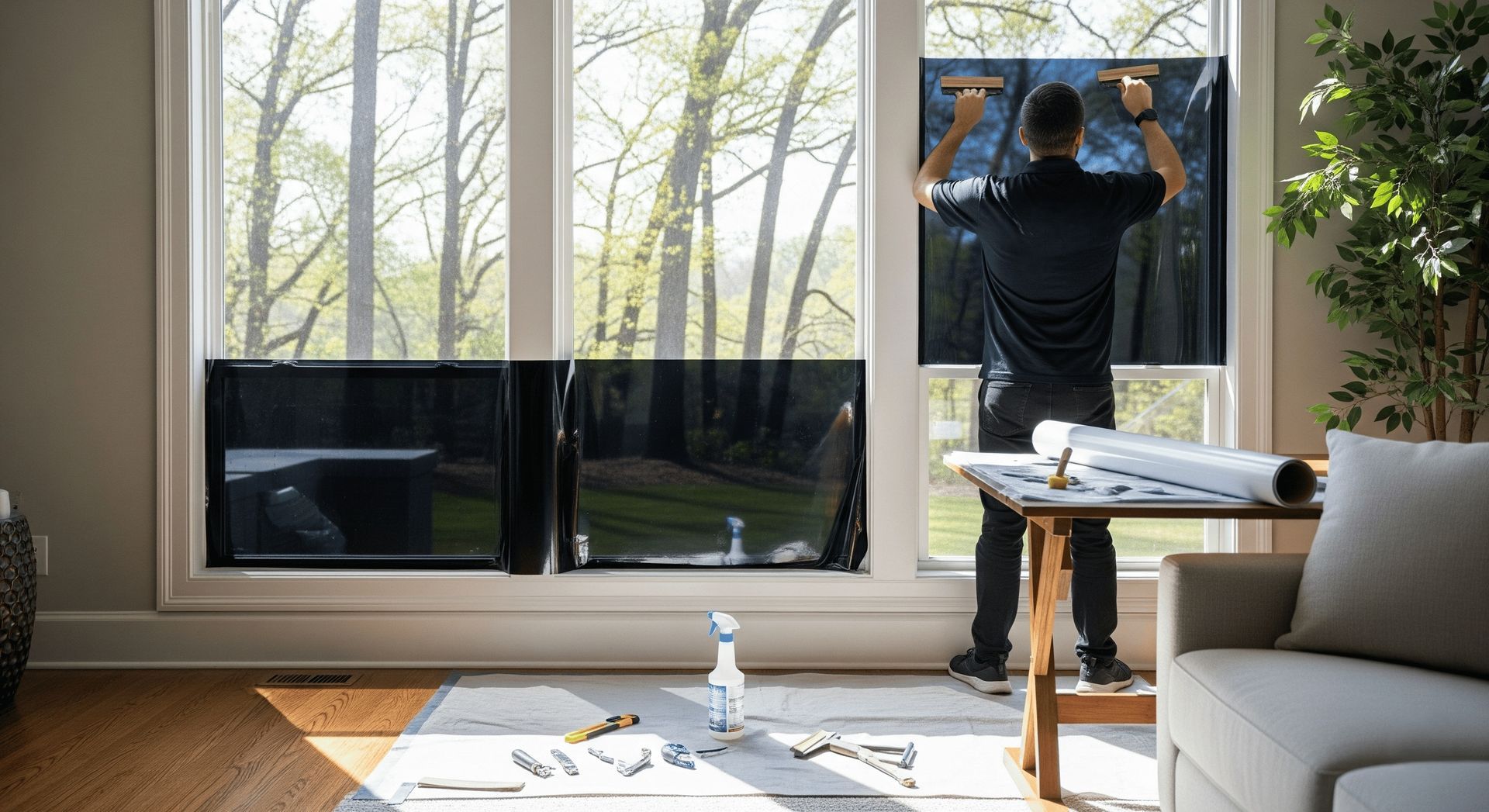
Even the best film needs quality installation to deliver its intended benefit. Clean fit, proper application, and an appropriate product recommendation all matter. As an authorized LLumar dealer, Trim Ideas helps local drivers compare LLumar CTX and IRX ceramic options based on real goals such as comfort, clarity, and long-term summer performance rather than hype alone.
FAQ
How much heat can window tint actually block?
Quality window tint can block a meaningful portion of solar heat, but the exact amount depends on the film type, construction, glass, and installation coverage. Ceramic tint usually offers the strongest overall heat-control performance.
What does TSER mean on a window tint spec sheet?
TSER stands for Total Solar Energy Rejected. It measures how much of the sun's overall energy is prevented from entering the vehicle, making it one of the most useful ways to compare heat-control performance.
Does darker tint always block more heat?
No. Darker tint can reduce glare and visible light, but film technology matters more than darkness alone. A lighter premium ceramic film can outperform a darker lower-grade film for heat rejection.
How much cooler does a car feel with ceramic tint?
Many drivers notice a cooler-feeling cabin, less harsh radiant heat, and more manageable interior surfaces. Exact temperature differences vary by vehicle, sun exposure, and parking conditions.
Can window tint prevent a hot car interior in summer?
No tint can completely prevent a vehicle from getting hot in full summer sun. What quality tint can do is reduce heat gain, improve comfort, and lessen how extreme the interior feels.
Does tint reduce dashboard and steering wheel temperature?
Yes. Window tint can help reduce how intensely these surfaces heat up by limiting solar energy entering through the glass. Premium ceramic film is often the strongest option for this benefit.
How does ceramic tint compare to carbon tint for heat rejection?
Ceramic tint usually provides stronger overall heat rejection and better infrared control than carbon tint. Carbon is still a solid upgrade over basic dyed film.
Does window tint block infrared heat or just visible light?
Quality window tint helps manage both. Infrared control is a major contributor to heat rejection, while visible light control primarily reduces brightness and glare.
Will tint lower how hard my AC has to work?
It can help reduce the cooling load by lowering solar heat gain, making the cabin feel easier to cool. The exact effect depends on the vehicle, weather, and driving conditions.
Does tint percentage affect how much heat is blocked?
Yes, but not as much as many people assume. Film technology and total solar performance generally have a greater impact on heat rejection than darkness alone.
Do all four windows need to be tinted to feel a difference?
Full vehicle coverage usually provides the most consistent comfort because untreated glass still allows heat to enter. Many drivers experience the best overall results when all side and rear windows are tinted.
Does windshield tint or a windshield strip help block additional heat?
It can, depending on the coverage and applicable legal requirements. Since the windshield is a major source of solar heat, even partial coverage can contribute to a more effective heat-control strategy.
How long does it take to notice a heat difference after installation?
Most drivers notice the improvement as soon as they return to their normal driving and parking routine, especially during sunny afternoons or after parking outdoors.
Does humidity affect how well window tint performs in Georgia?
Humidity does not change the film's heat-rejection properties, but it can make cabin heat feel more uncomfortable. Reducing solar heat gain can therefore feel especially beneficial during Georgia's humid summers.
How do I know which tint will give me the most heat protection for my vehicle?
Compare the film type, TSER rating, infrared heat rejection, and your daily driving habits. For many drivers in Rome and Floyd County, premium ceramic window tint provides the strongest overall heat-control performance.
Conclusion
So, how much heat can window tint block in a Georgia summer? The most accurate answer is that quality tint can block a meaningful amount of solar heat and make a noticeable difference in comfort, especially when you move from basic film to premium ceramic technology. The biggest benefits are not only lower glare or darker glass. They are measurable reductions in solar load, better interior protection, and a cabin that feels less punishing during Rome's hottest summer conditions.
For drivers who want the strongest heat-control performance, LLumar ceramic window tint options such as CTX and IRX are often the most compelling choices because they combine strong heat rejection, UV protection, and premium daily-driving comfort. If you are comparing window tint near me and want a solution tailored to your vehicle and summer driving habits, contact Trim Ideas for a free estimate. Local drivers in Rome, GA and across Floyd County can get expert guidance on the right LLumar ceramic window tint package for real-world Georgia heat.